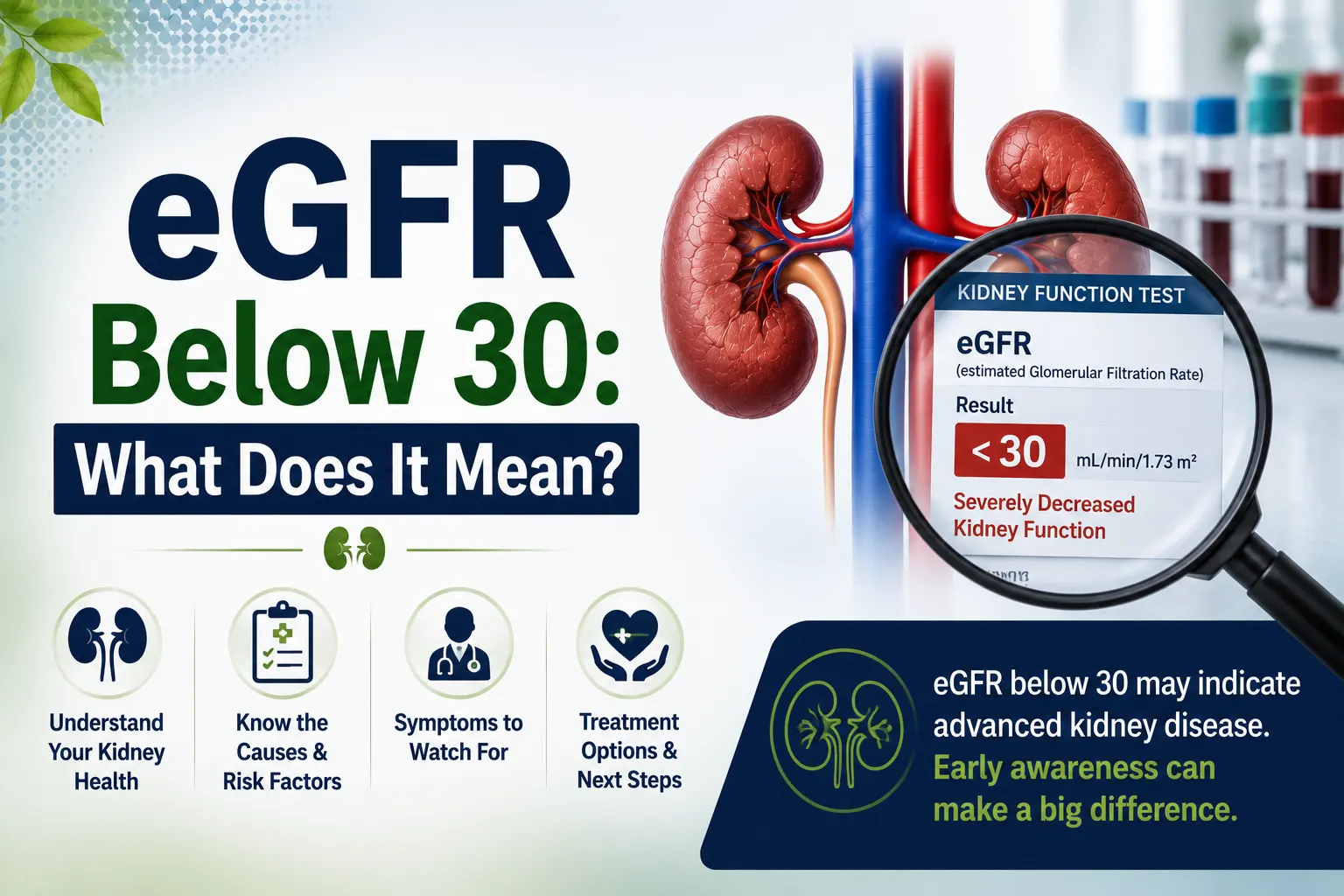

An eGFR below 30 means your kidneys are working at less than a third of their normal capacity, and you've officially entered Stage 4 Chronic Kidney Disease (CKD). It's a serious number, but it's not a "start packing your bags" number either; plenty of people live for years at this stage with the right care.
Okay, deep breath. If you (or someone you love) just got a lab report with the letters "eGFR" and a number under 30 sitting next to it, you probably Googled it in a slight panic at 11 PM. Relatable. Let's slow it down and actually understand what's going on, minus the medical jargon and minus the doom-scrolling.
Wait, What Even Is eGFR?
eGFR, or estimated Glomerular Filtration Rate, is basically your kidneys' report card. It estimates how much blood your kidneys filter per minute, based on your blood creatinine level, age, sex, and sometimes race (though newer equations are moving away from race-based calculations, and rightly so). Think of your kidneys as a coffee filter; a good one lets the coffee through and keeps the grounds out. eGFR tells you how clogged that filter has gotten.
A "normal" eGFR is generally 90 or above. Anything consistently below that starts raising eyebrows, and kidney function is officially graded into stages:
|
CKD Stage |
eGFR Range |
What It Basically Means |
Vibe Check |
|
Stage 1 |
90+ |
Kidneys are fine, some other sign of damage exists |
"All good, just keep an eye on me" |
|
Stage 2 |
60–89 |
Mild dip, nothing dramatic |
"Slightly tired, still showing up to work" |
|
Stage 3 |
30–59 |
Moderate damage, doctor visits get more frequent |
"I need a coffee break, buddy" |
|
Stage 4 |
15–29 |
Severe reduction, serious planning time |
"I'm running on fumes, let's talk options" |
|
Stage 5 |
Below 15 |
Kidney failure, dialysis or transplant territory |
"I need backup, now" |
(Yes, we made this table slightly funny on purpose. Kidneys deserve some comic relief too.)
So an eGFR below 30 Means... Stage 4?
Pretty much. An eGFR below 30 places you in Stage 4 CKD (or the very edge of Stage 5, if it's dipping toward 15). At this stage, your kidneys are filtering less than 30% of what they should, and your body starts noticing the difference, even if you don't feel drastically different day to day.
According to the KDIGO 2024 Clinical Practice Guideline for CKD, one of the most widely used international references for kidney disease management, this range is when doctors start seriously preparing patients for what comes next: closer monitoring, medication adjustments, dietary changes, and conversations about future treatment options like dialysis or transplant, well before they're actually needed.
What Actually Happens in Your Body at This Stage?
Your kidneys don't just filter waste; they also help regulate blood pressure, balance electrolytes, keep your bones strong, and produce a hormone that tells your bone marrow to make red blood cells. So when function drops below 30%, a few things can start showing up:
-
Fatigue; because fewer red blood cells means less oxygen circulating (a classic kidney-disease symptom called anemia)
-
Swelling in the ankles, feet, or around the eyes; fluid retention showing up uninvited
-
Changes in urination; more at night, foamy, or noticeably less
-
High blood pressure that's suddenly harder to control
-
Nausea, appetite loss, or a metallic taste; waste products building up in the blood
-
Muscle cramps or bone pain; thanks to messed-up calcium and phosphorus levels
Not everyone gets all of these, and some people barely notice symptoms until function drops even lower, which is exactly why routine bloodwork matters so much.
Can You Slow It Down From Here?
Yes, and this is honestly the most important part. A low eGFR doesn't automatically mean a one-way ticket to dialysis. Progression can often be slowed with the right approach.
A large real-world cohort study published in 2025 (looking at over 2,000 CKD patients across stages G1–G4) found that factors like uncontrolled blood pressure, diabetes, low hemoglobin, and higher albuminuria were strongly linked to faster kidney decline, while good blood pressure control and appropriate medication use were protective. Translation: the boring stuff (blood pressure control, blood sugar management, and taking your meds on schedule) genuinely moves the needle.
Similarly, the landmark STOP-ACEi trial (published in the New England Journal of Medicine) found that stopping certain blood pressure medications (ACE inhibitors/ARBs) once eGFR drops low doesn't actually slow kidney decline the way doctors once assumed; reinforcing that continuing these medications, under medical supervision, often remains beneficial even at advanced CKD stages.
Here's what typically helps at this stage:
-
Blood pressure control; the single biggest lever for slowing kidney damage
-
Blood sugar management if diabetes is in the picture
-
Cutting back on sodium, potassium, and phosphorus depending on your specific labs (a renal dietitian is worth their weight in gold here)
-
Avoiding NSAIDs like ibuprofen, which are rough on already-struggling kidneys
-
Staying on prescribed medications, even ones that feel unrelated to your kidneys
-
Regular monitoring so your care team can catch changes early
When Does the "Dialysis Talk" Start?
Usually around Stage 4, doctors start the conversation early; not because dialysis is imminent, but because planning (vascular access, transplant evaluation, education) takes time and works better when it's unhurried. It's less "emergency" and more "let's have the roadmap ready."
Key Takeaways
-
An eGFR below 30 puts you in Stage 4 CKD; serious, but manageable with the right care
-
Kidneys at this stage filter less than 30% of normal capacity
-
Common symptoms include fatigue, swelling, appetite changes, and high blood pressure
-
Blood pressure and blood sugar control are the biggest levers for slowing progression
-
This stage is the right time for proactive planning, not panic
Disclaimer
This blog is for general informational purposes only and isn't a substitute for professional medical advice, diagnosis, or treatment. eGFR results and CKD management vary person to person. Always consult a qualified nephrologist or healthcare provider about your specific labs, symptoms, and treatment plan.
FAQs
Is an eGFR below 30 considered kidney failure?
Not quite; it's Stage 4 CKD (severe), while actual kidney failure is Stage 5, usually below 15.
Can eGFR go back up once it drops below 30?
It can improve slightly with good management, but significant reversal is rare since existing kidney damage is usually permanent.
Does eGFR below 30 always mean dialysis is coming?
Not immediately; many people stay stable at this stage for years with proper treatment before dialysis becomes necessary.
What foods should I avoid with an eGFR below 30?
Generally high-sodium, high-potassium, and high-phosphorus foods, but the exact list depends on your specific bloodwork, so check with a renal dietitian.
How often should eGFR be checked at this stage?
Most doctors recommend checking every 3 months, though your nephrologist may want it more frequently depending on how things are trending.