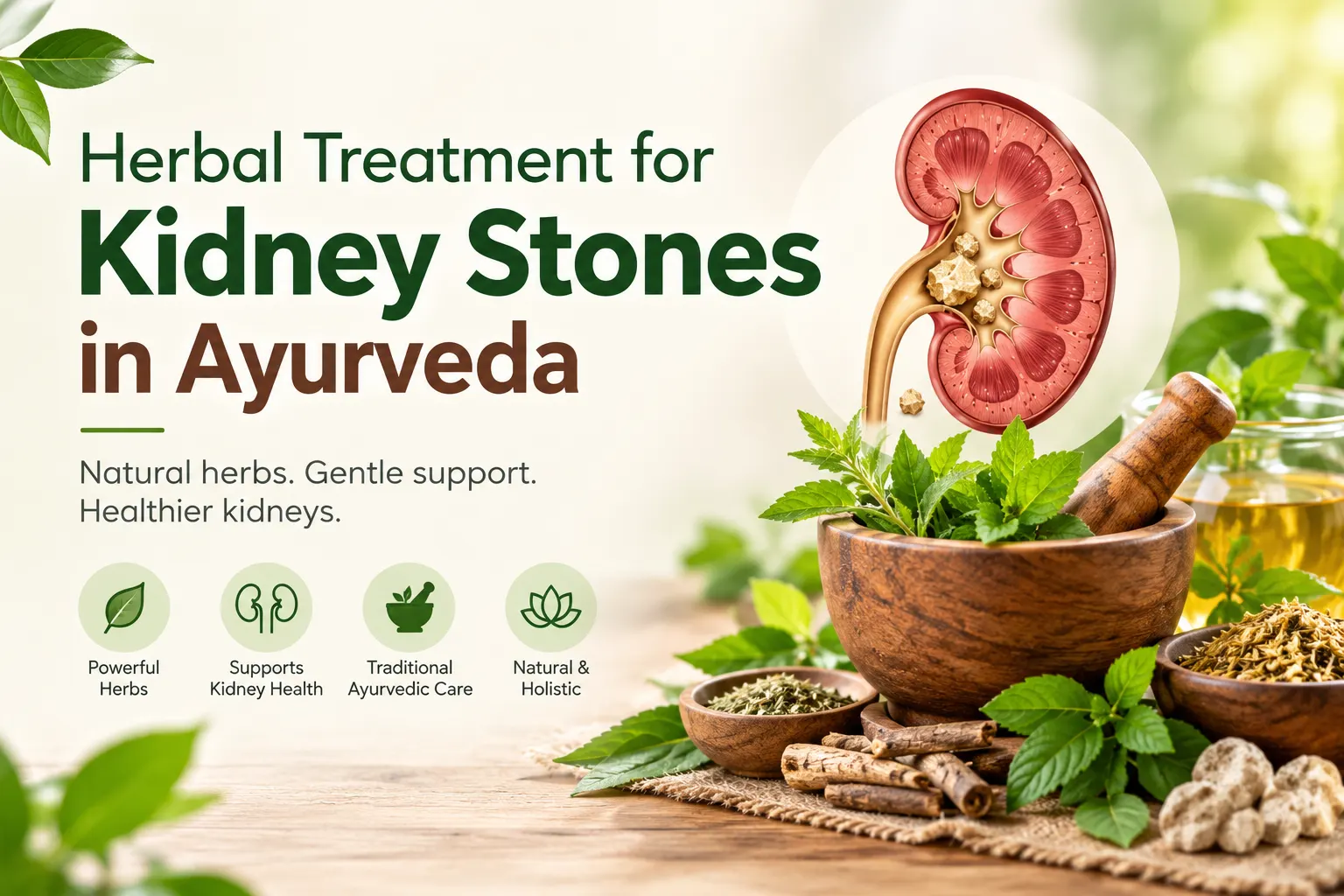

The best herbal treatment for kidney stones in Ayurveda includes Pashanbhed, Gokshura, Varuna, and horse gram. These herbs have traditionally been used in treating kidney stones to improve urine flow and help pass smaller kidney stones. But it must be mentioned that there is still not enough evidence to support their effects.
So, if somebody has promised you some kind of magic powder that will dissolve the stones by Friday, you should retreat. Let's see what the herbs actually do.
How Ayurveda Looks at Stones
In Ayurvedic renal stones treatment, stones are called Ashmari. In the view of classical Ayurveda, they result from imbalances, bad digestion, and inadequate water intake, which coincidentally matches modern medical advice. Usually, it's not one herb for every situation but rather a complex therapy involving diet, water consumption, lifestyle, and herbs tailored to the individual's constitution and history of stones.
Best Herbal Remedies for Kidney Stones: The Usual Suspects
The main herbal remedies in Ayurvedic medicine recommended for kidney stones are the following:
- Pashanbhed (Bergenia ligulata): the name of the herb translates roughly to "stone breaker".
- Gokshura (Tribulus terrestris): Traditionally used for urinary comfort and flow.
- Varuna (Crataeva nurvala): widely regarded as beneficial for the treatment of various urinary tract infections.
- Kulthi (horse gram): a humble lentil with a loyal folk following.
- Punarnava (Boerhavia diffusa): traditionally used to help maintain fluid balance.
What the Research Says
But these facts have scientific evidence. A study carried out by Bashir and Gilani (2009, Journal of Ethnopharmacology) shows that the extract of Bergenia ligulata decreased the formation of crystals in laboratory animals. Agarwal et al. (2014, Pharmacognosy Reviews) conducted a review of the antilithiatic plants and revealed that most of them showed promise in laboratory studies, but there was not a sufficient number of high-quality human trials.
Finally, a trial of Phyllanthus niruri carried out by Barros et al. (2003, Urological Research) indicated a change in the amount of urinary calcium in people with kidney stones, but this study was not large.
Promising? Yes. Proven? Not really. Think of a good first impression, not a commitment to life.
Kidney Stone Remedies: Ayurvedic herbs; what’s the truth?
|
Herb |
Traditional use |
Honest funny note |
|
Pashanbhed |
Stone support |
Great name |
|
Gokshura |
Urinary flow |
Popular, but check with your doctor first |
|
Kulthi |
Folk remedy |
Soup counts as self-care, apparently |
|
Varuna |
Urinary tract support |
Less famous, quietly respected |
The Part Nobody Posts on Instagram
The herbs are not necessarily harmless. Some of them can interact with medicines, increase blood pressure and glucose, or increase the load on kidneys in cases where filters do not work effectively. Besides, the quality of such products is not always high, and they can include various ingredients not listed on the label. According to Luyckx (2012, Kidney International), unregulated herbal products are the cause of various renal injuries. Therefore, "natural" does not necessarily mean "harmless", despite the appearance of the label.
Still, the Fundamentals Do All the Heavy Work
The best herb cannot overcome a bad habit. The American College of Physicians guideline (Qaseem et al., 2014, Annals of Internal Medicine) recommends drinking about 2 litres of urine daily to prevent recurrence. It is the very basis of treatment.
An effective natural treatment of kidney stones should look like this:
- Drink fluids evenly all day long.
- Add some lemon to your water, thus obtaining some citric acid.
- Take foods that have lots of calcium in your diet, such as curd.
- Try to reduce intake of salt, snacks, and sugary drinks.
- Inform your doctor about all herbs you take.
Personalized Guidance
The best Ayurvedic kidney stone treatment works only if it is tailored to you, not copied from internet forums. In places such as Karma Ayurveda (under Dr. Puneet Dhawan), this type of approach is practiced. That is why it is very important to share your scans and lab results with your doctor during the first consultation. As for the best Ayurvedic herbs for kidney stone patients, it depends on the size and type of stone as well as your overall condition.
Herb Treatments That Aren't Advisable
If you have fever, chills, vomiting, blood in urine, or sharp abdominal pain that makes you unable to find a comfortable position, you should seek medical help immediately because the situation involving infection in your case cannot be treated at home.
Summary of Results
- The most popular herbs are Pashanbhed, Gokshura, Varuna, and kulthi.
- Evidence is promising but mostly from lab, animal, or small studies.
- Water and diet matter more than any single herb.
- Some herbs can interact with medicines or harm weak filters.
- Personalised guidance beats generic internet advice.
📩 Ask a Kidney Expert (Free 10-Min Consultation)
FAQs
What is the best herbal treatment for kidney stones in Ayurveda?
Pashanbhed, Gokshura and kulthi are popular picks, but the right one depends on you.
Can Ayurvedic herbs dissolve kidney stones?
They may help small stones pass or support prevention, but they’re not a guaranteed dissolver.
Is Pashanbhed safe?
Usually fine in guided use, though your doctor should check it against your medicines.
Can I take herbs along with my prescribed medicines?
Only after telling your doctor, since some herbs love to interfere.
How long do herbal remedies take to work?
It varies a lot, so patience and regular follow-ups beat quick-fix promises.
Disclaimer
This article is for general information only and isn’t medical advice, diagnosis, or treatment. Stone types and sizes vary. Please consult a qualified doctor before starting herbs or supplements, changing your diet, or delaying care for severe pain, fever, or blood in urine.