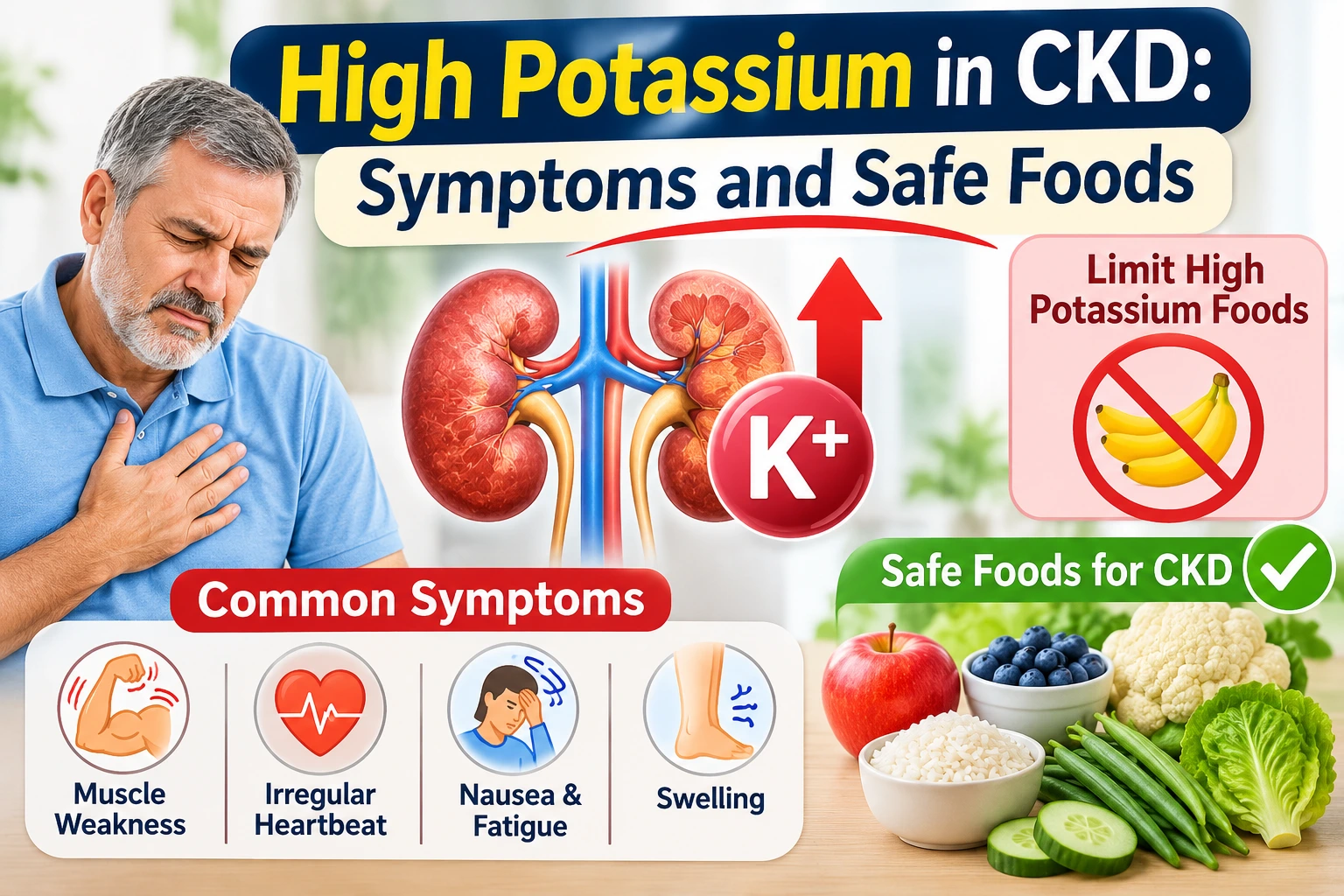

Usually, hyperkalemia can cause signs of weakness, tingling, and even an irregular heart rhythm. The safest approach is to include low-potassium foods in your diet, such as apples, berries, cauliflower, and white rice.
Potassium is a mineral that your body needs, but when your kidneys' function is hampered, high potassium food intake may result in serious health issues, similar to a pile of unwashed dishes left after a party. Today, we'll talk about the high-potassium foods you should avoid when you have CKD, and discuss the food choices you may continue to include in your diet happily.
Why Does Potassium Build Up?
Properly functioning kidneys can easily flush out extra potassium from the body, but in the case of chronic kidney disease, this becomes a problem, and the excess potassium remains in the blood. This is known as hyperkalemia and is very dangerous because potassium is essential for the normal functioning of the heart.
What Do the Studies Say?
- Einhorn et al. (2009, Archives of Internal Medicine): In a large group of patients, hyperkalemia was common in patients suffering from chronic renal disease and taking certain blood pressure medications.
- Kovesdy et al. (2007, Journal of the American College of Cardiology) showed that high as well as low levels of potassium were associated with higher mortality in patients with advanced disease.
- Hayes et al. (2012, Clinical Journal of the American Society of Nephrology): Hyperkalemia increased the risk of visiting the hospital of the patients taking RAAS-blocking drugs.
- Noori et al. (2010, American Journal of Nephrology) found an association of increased potassium intake with the accelerated progression of CKD in some of the studied individuals.
- Clase et al. (2020, Kidney International) report that the relationship between food potassium and blood potassium is more complex than it seems and sometimes the ban is not necessary.
Symptoms: What Could You Notice?
Mild forms of this condition may be completely asymptomatic. If symptoms show themselves, they may include:
- Muscle weakness or legs becoming heavy
- Tingling or numbness
- Nausea or stomach upset
- Fatigue
- Palpitations and a missed heartbeat
- In the case of severe symptoms of such illness, Chest pain or even syncope requires emergency medical help
Since signs of this problem are not always visible, blood tests are the key point in diagnosing the illness.
Foods That Increase Potassium Level
Let's talk about the high-potassium foods to avoid in CKD:
- Bananas, oranges, and orange juice
- Potatoes and sweet potatoes
- Tomatoes and tomato sauce
- Coconut water (a healthy drink that can be dangerous)
- Spinach and the leaves of plants that contain vitamin K, when they are taken in large doses.
- Dried fruits, beans, and nuts
- Potassium chloride-based salt substitutes
Low Potassium Foods for CKD
Good news: you will be living on something else apart from plain toast. Low potassium foods for CKD are:
- Apples, berries, grapes, and pineapple
- Cauliflower, cabbage, cucumber, and capsicum
- white rice, pasta, and bread
- Egg whites
- Onions and garlic (the heroes of flavor)
Quick Comparison
|
Swap This |
For This |
Why |
|
Banana |
Apple |
The first is a potassium bomb, and the second one is a calm neighbor. |
|
Potato (plain) |
Cauliflower |
Same comfort, less drama |
|
Coconut water |
Plain water |
Boring, but behaves |
|
Tomato sauce |
Garlic and herbs |
Flavor without the baggage |
Useful Kitchen Tips
- Leaching veggies: peel, slice thin, soak in warm water, then boil in fresh water. This can pull out a good share of the potassium.
- Be careful with the portion sizes of healthy food items because even they add up.
- Read labels for potassium chloride.
- Ignore the liquid in the cans because potassium can be drained off along with the liquid.
How Does Ayurveda Relate?
People who are just diagnosed with CKD usually start reading about Ayurvedic CKD treatment or kidney disease Ayurvedic treatment and seek information on available options. Often, the topic of discussion in this regard revolves around herbs and diets; however, one must understand that some of these herbs and juices are rich in potassium or may interact with the medications you are taking. Thus, consider them as a complement rather than an alternative to allopathic treatment and inform your nephrologist about your choice of treatments.
The Bottom Line
You don't need to be scared of anything. You need a plan, a good lab report, and a doctor who knows your numbers. In case you need an integrative treatment, you may look for help at Karma Ayurveda. If you are concerned with the treatment of kidneys, for example, you may ask your doctor for recommendations on a natural treatment of kidney disease as a supplement to the normal medical procedure.
Key Takeaways
- High potassium often has no early symptoms, so blood tests matter
- Bananas, potatoes, tomatoes, and coconut water are common culprits
- Apples, berries, cauliflower, and white rice are gentler picks
- Food limits should match your lab values, not generic lists
- Herbs and Ayurveda complement care but never replace it
📩 Ask a Kidney Expert (Free 10-Min Consultation)
FAQs
What are the symptoms of high potassium in CKD?
Weakness, tingling, nausea, and palpitations, though many people feel nothing at all.
What are the best low potassium foods for CKD?
Apples, berries, cauliflower, cabbage, and white rice are friendly starting points.
Are bananas really off the menu?
Often limited, yes, but your doctor decides based on your blood levels.
Does soaking vegetables really help?
Yes, leaching can lower potassium, so it’s a handy kitchen trick.
Who can I consult for Ayurvedic kidney care?
Practitioners like Dr. Puneet Dhawan are one option, ideally alongside your regular doctor.
Disclaimer
This blog is for general information only and isn’t medical advice. Please consult a qualified doctor or renal dietitian before changing your diet or starting any herb, supplement, or treatment, especially with an existing condition. Mentions of practitioners or centers are informational, not endorsements or guarantees of results.
.webp "BUN vs Creatinine: What Is the Difference?")