
If you’ve ever had a burning sensation while peeing and immediately thought, “Well, this is it, my body has betrayed me,” welcome to the club. Kidney and bladder infections are common in the U.S., and while they feel dramatic, they are usually very treatable when handled correctly.
This guide will walk you through symptoms, recovery, and modern medical care in a friendly, no-stress way, with a bit of humor so it doesn’t feel like a medical textbook is yelling at you.
What Actually Are Kidney and Bladder Infections?
A bladder infection (cystitis) is when bacteria, usually E. coli, which normally hangs out in your gut, decides to take a vacation into your bladder. Bad idea for everyone involved.
A kidney infection (pyelonephritis) is when things escalate, and the bacteria travel upward into your kidneys. Think of it as a “chain reaction problem” that started in the bladder and moved upstairs like an unwanted guest.
Together, they fall under urinary tract infections (UTIs), and they are part of everyday clinical life in U.S. hospitals and clinics.
Signs You Might Have a UTI or Kidney Infection
Your body usually sends very dramatic signals. It is not subtle.
Common bladder infection symptoms:
-
Burning while urinating
-
Frequent urge to pee (even when nothing comes out)
-
Cloudy or strong-smelling urine
-
Mild pelvic discomfort
Signs of a severe kidney infection:
-
High fever (often above 101°F)
-
Back or side pain (especially under ribs)
-
Nausea or vomiting
-
Chills that feel like you’re in Antarctica
-
Extreme fatigue
If you feel like your body is staging a rebellion, that’s your cue.
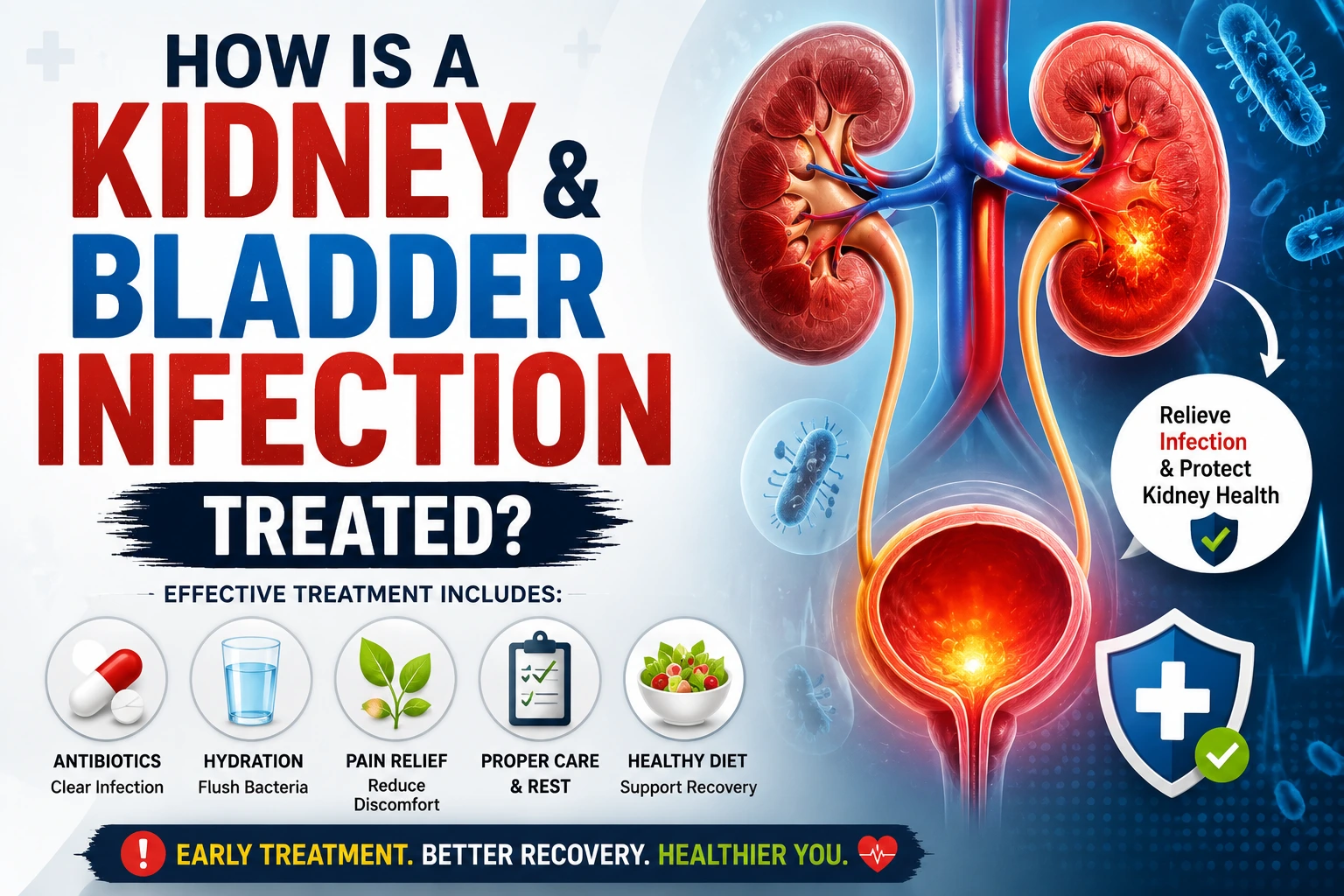
How Do You Treat a Kidney Infection? (Medical Reality Check)
Let’s address the big question: how do you treat a kidney infection
In the U.S., doctors typically treat it with:
-
Antibiotics (oral or IV depending on severity)
-
Pain relievers (for discomfort and fever)
-
Hydration (water becomes your best friend)
-
Hospitalization in severe cases
For mild cases, oral antibiotics at home are enough. For severe infections, IV antibiotics are used in hospitals because kidneys don’t appreciate “DIY treatment.”
A well-known guideline supported by the Infectious Diseases Society of America (IDSA Guidelines on UTIs) emphasizes early antibiotic treatment to prevent complications like sepsis or kidney damage.
📩 Ask a Kidney Expert (Free 10-Min Consultation)
What Is the Best Treatment for Kidney Infection? (Spoiler: It’s Not Cranberry Juice Alone)
Let’s clear this up gently: cranberry juice is nice, but it’s not a superhero.
What is the best treatment for kidney infection is actually:
-
Prompt antibiotics (based on urine culture results)
-
Completing the full antibiotic course
-
Rest and hydration
-
Follow-up testing if symptoms persist
Research-backed studies like “NEJM Clinical Study on Acute Pyelonephritis Management” show that early antibiotic therapy dramatically reduces hospitalization time and complications.
So yes, medicine wins this round.
Bladder Infection Care (The Calm Before the Storm Prevention Plan)
Bladder infection care usually focuses on stopping infection early before it travels upward.
Doctors typically recommend:
-
Short-course antibiotics (often 3–7 days)
-
Drinking plenty of fluids
-
Avoiding irritants like caffeine and alcohol during infection
-
Urinating regularly (don’t “hold it” like you’re in a traffic jam in Delhi or New York)
According to the American Urological Association (AUA Guidelines on UTIs), early treatment reduces recurrence risk significantly.
Treatment for Kidney and Bladder Infection (Yes, There Is a System)
The treatment for kidney and bladder infection follows a structured medical approach in the U.S.:
Step 1: Diagnosis
-
Urine test (urinalysis)
-
Urine culture (to identify bacteria)
Step 2: Antibiotics
-
Bladder infection: usually oral antibiotics like nitrofurantoin or trimethoprim-sulfamethoxazole
-
Kidney infection: stronger or longer antibiotic course
Step 3: Symptom control
-
Fever reducers
-
Pain relief medications
-
Fluids
Step 4: Monitoring
-
If symptoms don’t improve in 48–72 hours, doctors reassess
A study titled “JAMA Internal Medicine UTI Treatment Outcomes Study” found that delayed antibiotic treatment increases risk of kidney complications; so speed matters.
Kidney Infection Treatment (When Things Get Serious)
Kidney infection treatment is more aggressive than bladder infection care because kidneys are important multitasking organs (they don’t like drama).
Treatment includes:
-
IV antibiotics in hospital (for severe cases)
-
Strong oral antibiotics for 7–14 days (mild cases)
-
Imaging tests if infections keep coming back
Sometimes doctors check for blockages or kidney stones because bacteria love hiding behind them like villains in a movie.
Urinary Infection Management (Long-Term Strategy, Not Just Quick Fix)
Urinary infection management is about preventing repeat infections:
-
Drink 6–8 glasses of water daily
-
Don’t delay urination
-
Wipe front to back (yes, hygiene matters more than people admit)
-
Urinate after sexual activity
-
Avoid overly scented hygiene products
The Cochrane Review on UTI Prevention Strategies highlights hydration and behavioral changes as key factors in reducing recurrence.
Recovery: What Happens After Treatment?
Once antibiotics kick in, most people feel better in:
-
24–48 hours (bladder infection)
-
3–5 days (kidney infection)
But here’s the catch: just because you feel better doesn’t mean the bacteria have fully packed their bags.
So:
-
Finish all antibiotics
-
Don’t skip doses
-
Rest like your body is doing important background work (because it is)
Warning Signs You Should Not Ignore
If you notice any of these, seek medical help immediately:
-
Fever that doesn’t go down
-
Worsening back pain
-
Confusion or dizziness
-
Vomiting that prevents hydration
-
No improvement after antibiotics
These could indicate complications.
📩 Ask a Kidney Expert (Free 10-Min Consultation)
Final Thoughts: Your Kidneys Deserve Respect, Not Stress
Kidney and bladder infections are common, treatable, and usually short-lived when managed properly. The key is early action, proper medication, and not relying on internet “miracle cures” involving lemon water and positive vibes alone.
Modern medicine has made treatment for kidney and bladder infection highly effective, and studies consistently show that early antibiotic care leads to fast recovery and fewer complications.
So, if your body starts sending “urgent bathroom emails,” don’t ignore them. Your kidneys are polite organs; they just become very loud when unhappy.
And honestly, they deserve better.
KEY TAKEAWAYS
-
Kidney and bladder infections are common in the U.S. and usually caused by bacteria entering the urinary tract.
-
Burning while peeing, frequent urination, fever, and back pain are key warning signs.
-
Bladder infections are milder, but can turn into kidney infections if ignored.
-
Kidney infections are more serious and may need stronger antibiotics or even hospital care.
-
Early treatment for kidney and bladder infections with antibiotics is the fastest and safest way to recover.
-
Always finish your full antibiotic course, even if you feel “magically cured” in 2 days.
-
Drink plenty of water, don’t hold urine for too long, and maintain good hygiene to prevent recurrence.
-
Watch out for signs of a severe kidney infection like high fever, vomiting, or strong back pain; don’t wait it out.
-
Good urinary infection management = early diagnosis + proper medication + simple lifestyle habits.
FAQs
1. What is the fastest treatment for kidney and bladder infection?
Antibiotics prescribed by a doctor are the fastest and most effective treatment for kidney and bladder infection.
2. Can a bladder infection go away without treatment?
Sometimes mild cases improve, but most need Bladder infection care with antibiotics to avoid complications.
3. What are early symptoms of a kidney infection?
Fever, back pain, chills, nausea, and fatigue are early warning signs.
4. How long does urinary infection treatment take?
Most UTIs improve within 1–7 days depending on severity and urinary infection management.
5. When should I see a doctor for a kidney infection?
If you have fever, vomiting, or back pain, seek care immediately for Kidney infection treatment.