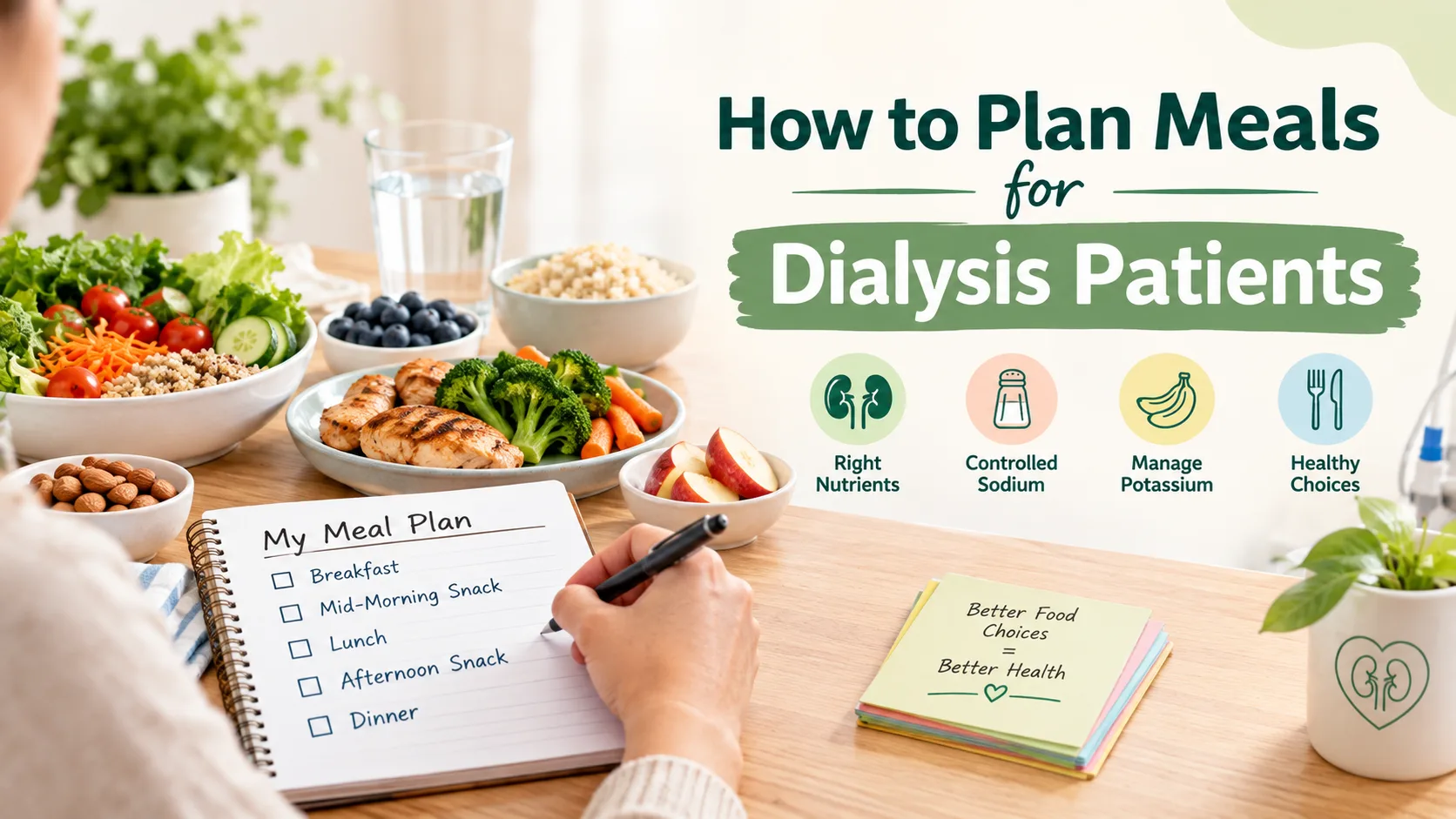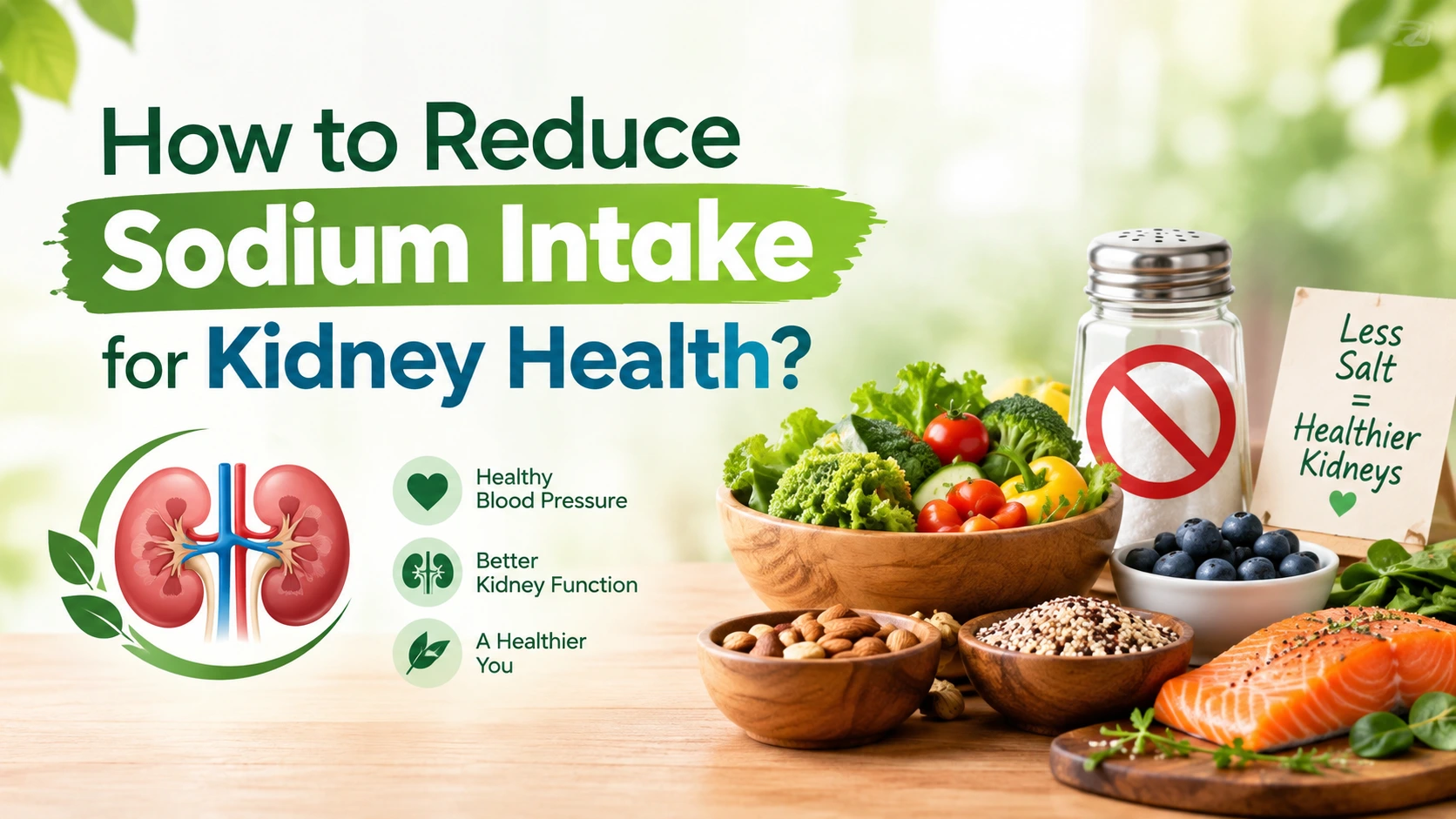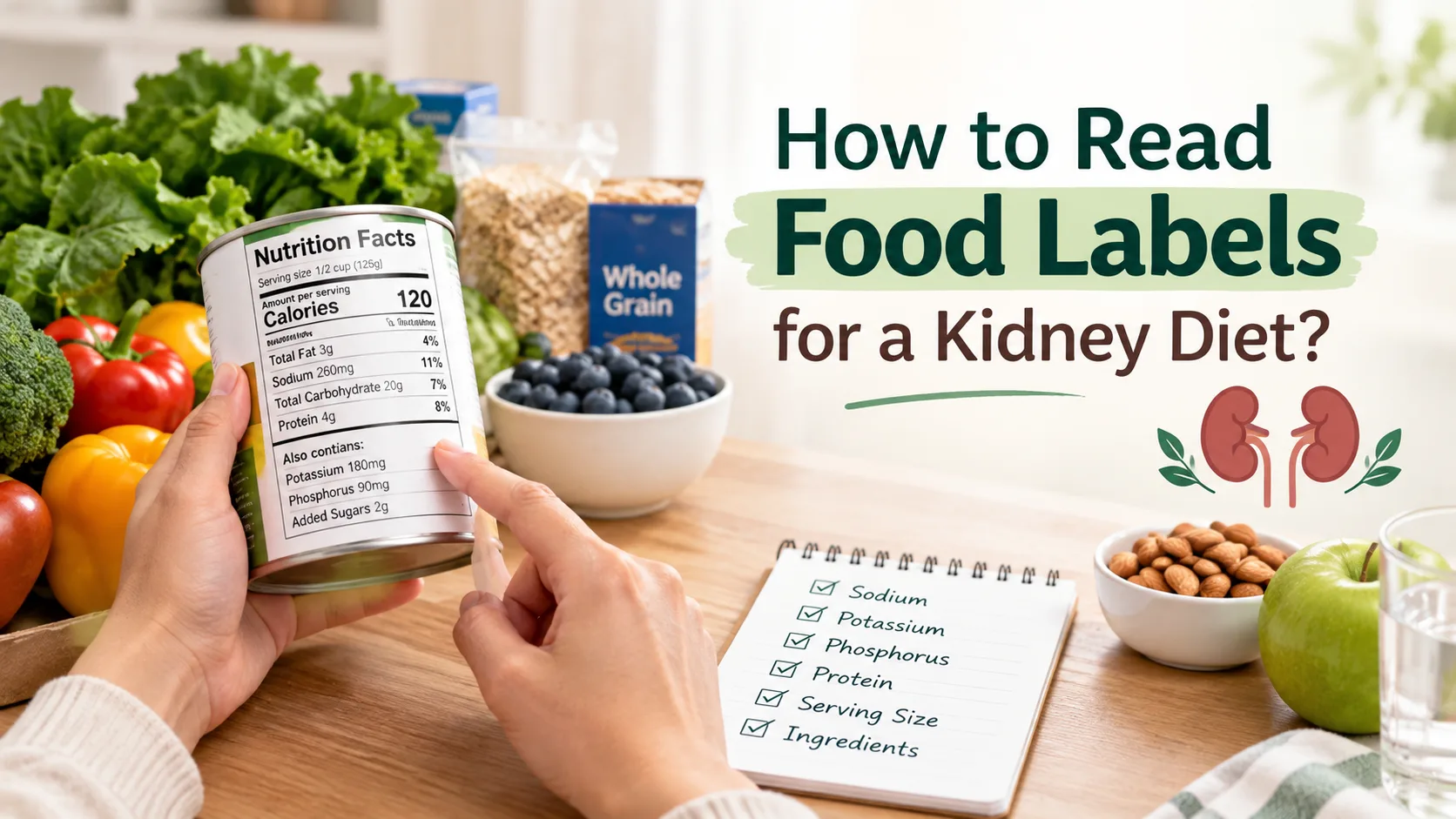

Reading food labels for a kidney diet sounds intimidating, but it really comes down to knowing what to look for: sodium, potassium, phosphorus, protein, serving size, and a few sneaky additives that like to hide in plain sight. You don't need to turn grocery shopping into a forensic investigation with a magnifying glass; a handful of simple habits will get you most of the way there.
Start With the Serving Size
Before you even glance at sodium or potassium, check the serving size first.
This is the thing everyone skips over. A packet might technically contain three servings, but let's be real; you're probably finishing the whole thing in one sitting while watching TV. And the nutrition label is only telling you the numbers for one of those three servings, not the whole packet.
So it's worth asking yourself:
- How many servings does this package actually contain?
- How much am I really going to eat?
- Are the sodium, potassium, or protein numbers per serving, or for the whole thing?
- Am I eating one serving, or, realistically, three?
None of the numbers on the label mean much until you connect them to what you're actually eating.
Sodium: The Number That Deserves Your Attention
Too much sodium contributes to fluid retention and makes blood pressure harder to keep under control, which matters a lot more once kidney function starts declining. Current CKD guidance generally points to keeping sodium under 2 grams a day for many adults with chronic kidney disease, though this can vary from person to person.
When you're checking a product, look specifically at sodium in milligrams (mg) rather than just scanning for the word "salt" somewhere on the box.
A few everyday foods that tend to carry way more sodium than people expect:
- Instant noodles
- Packaged soups
- Pickles and sauces
- Processed cheese
- Chips and savoury snacks
- Ready-to-eat meals
- Deli meats and processed meats
A genuinely useful habit is grabbing two similar products off the shelf and just comparing sodium per serving before deciding which one goes in your cart.
Potassium: Don't Panic Over Every Banana
Potassium gets talked about a lot in kidney diets, but here's the thing worth remembering: not everyone with reduced kidney function actually needs to restrict potassium. It really comes down to your blood potassium levels and your individual treatment plan.
The National Kidney Foundation actually recommends personalising potassium intake rather than just cutting out every potassium-rich fruit and vegetable across the board.
If you have been told to watch your potassium, check the nutrition panel for the number, but also scan the ingredients list; potassium likes to sneak in through additives too.
One to watch for specifically is potassium chloride, which often shows up in products marketed as "low sodium." Feels a bit unfair, doesn't it? You dodge the sodium, only to find out its replacement is potassium instead. Food labels have a real talent for keeping us humble.
A 2021 study that looked at 715 processed foods found that 37.6% of them contained at least one potassium-containing additive, which is a pretty good reason to check the ingredients list if you're someone who needs to keep potassium in check.
Phosphorus: The One That Really Hides
Phosphorus is probably the trickiest one to catch on a label.
Why? Because depending on where you live and the country's labelling rules, phosphorus doesn't always show up on the nutrition panel at all. So instead, you actually need to dig into the ingredients list itself.
Look for anything with:
"PHOS" in it.
That includes things like:
- Phosphoric acid
- Disodium phosphate
- Sodium phosphate
- Tricalcium phosphate
- Sodium tripolyphosphate
- Tetrasodium pyrophosphate
Phosphorus from additives gets absorbed into the body much more easily than the phosphorus naturally found in plant foods. The National Kidney Foundation specifically tells people to scan for "PHOS" in ingredient lists when phosphorus needs to be restricted.
And the research backs this up. One study in the Journal of Renal Nutrition found that processed meat, poultry, and fish products with phosphorus additives had noticeably higher phosphorus content than similar products without them.
Another study, looking at over 5,000 supermarket products, found phosphorus additives in 36% of what they checked.
So if your doctor or dietitian has asked you to keep phosphorus down, don't stop at the nutrition facts box; the ingredients list is where the real story is.
Protein: More Isn't Automatically Better
Protein matters for keeping your muscles and overall nutrition in good shape, but people with chronic kidney disease often have very different protein needs depending on their stage of CKD, their nutritional status, and whether they're on dialysis.
Which means grabbing whatever product has the biggest "high protein!" label on the front isn't really the move.
Instead, it's worth checking:
- Protein per serving
- What your own recommended daily intake actually is
- Whether that same product is also loaded with sodium or phosphate additives
- Whether it's a minimally processed food to begin with
This is exactly where personal advice from your own care team matters a lot more than any generic food list you'll find online.
A Quick Label Comparison
|
Label detail |
What to check |
Why it matters |
|
Sodium |
mg per serving |
Helps you manage sodium intake |
|
Potassium |
mg per serving + additives |
Matters if potassium needs to be restricted |
|
Phosphorus |
"PHOS" in ingredients |
Easy to completely miss on the nutrition panel |
|
Protein |
grams per serving |
Needs to match your specific requirements |
|
Serving size |
Actual portion you'll eat |
Because one serving has a way of becoming three |
Don't Get Fooled by "Low Sodium"
"Low sodium" on the label doesn't automatically mean it's a good fit for everyone with kidney disease.
Sometimes a reduced-sodium product swaps in potassium-based ingredients instead. Research has actually found that some sodium-reduced processed meats ended up with significantly more potassium, simply because potassium additives were used in place of sodium during production.
So rather than trusting the big bold claims printed on the front of the box, flip it around.
The real conversation always happens on the back.
What About Ayurvedic Approaches?
Diet is just one piece of managing a chronic condition like this. Some people also look into Kidney disease Ayurvedic treatment alongside their regular medical care.
Ayurvedic approaches tend to focus on food habits, daily routines, digestion, and lifestyle changes tailored to the individual, rather than a one-size-fits-all checklist.
If you're thinking about Ayurvedic kidney disease treatment, it's worth discussing with a qualified practitioner and your existing healthcare team, particularly if you're already on medication or dealing with more advanced disease.
And if you're looking into Karma Ayurveda for kidney disease treatment, make sure you actually understand what's being recommended specifically for your situation, rather than just following some generic diet chart you found online.
What About Herbs?
You've probably also come across searches for best herbs for kidney stones in Ayurveda or various herbal remedies for urinary health.
Here's the thing worth being careful about: "natural" doesn't automatically mean harmless, especially once kidney function is reduced. Some herbs and supplements can interact with medications, or contain minerals that need to be restricted just as much as anything in packaged food.
If you're considering a Natural treatment for kidney disease, talk through the specific ingredients with a qualified healthcare professional before adding anything new to your routine.
A Simple Grocery-Store Routine
You really don't need to spend half your weekend squinting at packets.
Here's a straightforward way to go about it:
Check the serving size.
Look at the sodium.
Check potassium, if you've been told to watch it.
Scan the ingredients for "PHOS."
Look for potassium additives, if that's relevant to you.
Check protein against your own plan.
Compare similar products side by side.
Go with simpler, less processed options when you can.
A 2024 survey covering 2,577 foods and beverages found that sodium was far more likely to actually be listed on labels than potassium or phosphorus, which explains why a bit of ingredient-list detective work is sometimes unavoidable.
And honestly, fresh food makes this whole thing a lot easier. A plain apple isn't hiding an ingredient list trying to trip you up.
Conclusion
Getting the hang of reading food labels for a kidney diet isn't about memorising a giant list of foods; it's about knowing exactly where to look. Start with the serving size, check sodium, keep your own potassium and protein needs in mind, and scan the ingredients for phosphate and potassium additives when it matters for you.
The point isn't to make grocery shopping stressful. It's to get you to the point where you can pick up a packet and think, "Alright, let's actually see what's in this thing," with a bit more confidence.
Key Takeaways
- Always check serving size before you even look at the nutrient numbers.
- Watch sodium if your healthcare team has told you to restrict it.
- Don't cut out potassium automatically; go by your blood results and your own plan.
- Scan for "PHOS" in the ingredients when phosphorus needs to be limited.
- "Low sodium" doesn't always mean low potassium; check for additives too.
- Protein needs vary a lot depending on kidney function and treatment stage.
- Less processed food genuinely makes label reading a lot easier.
- Always run herbal products by a healthcare professional before trying them.
📩 Ask a Kidney Expert (Free 10-Min Consultation)
FAQs
What should I check first on a food label if I have kidney disease?
Start with serving size and sodium, then move on to potassium and phosphorus based on your own dietary plan.
How do I spot hidden phosphorus on a label?
Scan the ingredients list for anything containing "phos"; things like phosphoric acid or disodium phosphate.
Is low-sodium food always the better choice for kidney disease?
Not necessarily; some low-sodium products use potassium-based additives instead, which matters if your potassium is already running high.
Does everyone with kidney disease need to go low-potassium?
No; it really depends on kidney function, blood potassium levels, medications, and individual medical advice.
Are herbal kidney remedies automatically safe just because they're natural?
No; some herbs can interact with medications or simply aren't appropriate when kidney function is reduced, regardless of how "natural" they are.
Disclaimer
This article is meant for general educational purposes and isn't a substitute for medical advice, diagnosis, or treatment. Dietary needs vary depending on kidney function, blood test results, medications, and dialysis status. Speak with a doc like Dr. Puneet Dhawan or a renal dietitian before making major changes to your diet or starting any herbs or supplements.