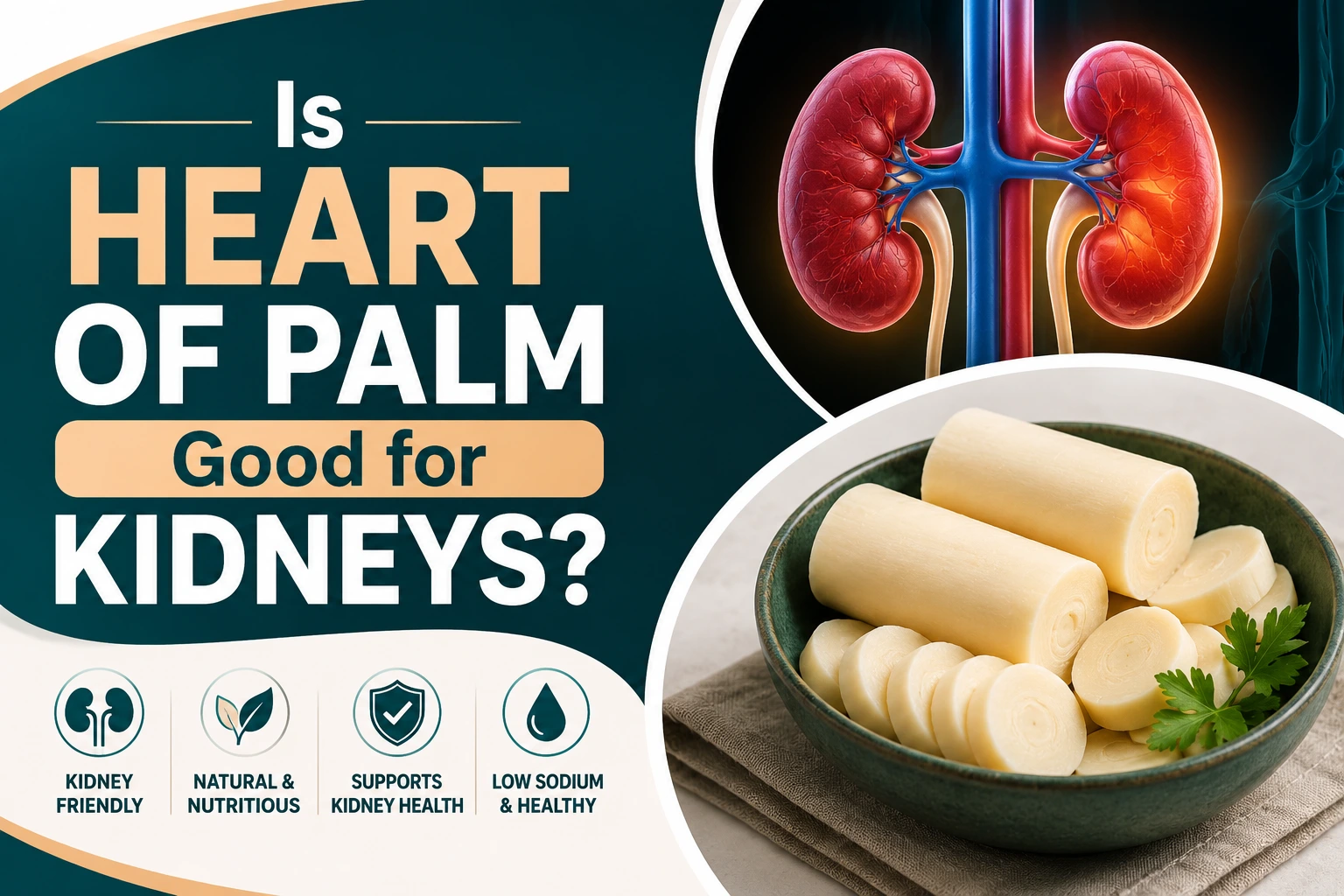

Yes, Heart of Palm can actually be considered to be good for the kidneys since it is low in sodium. Always opt for low-sodium products to ensure kidney safety.
Dealing with Chronic Kidney Disease (CKD) or just trying to keep your renal system happy can feel like navigating a minefield where the mines are made of bananas and spinach. It’s exhausting to constantly play detective with your dinner. But today, we’re putting on our lab coats and our chef hats to figure out if heart of palm is the kidney-friendly superhero you’ve been waiting for or if it’s just a flashy tropical imposter.
Is Heart of Palm Good for Kidneys?
The short answer? Yes. The long answer? Yes, but with a side of "don’t eat the whole can in one sitting while binge-watching your favorite sitcom."
Heart of palm is essentially the bud from the inner core of certain palm trees. Because it’s harvested from the center, it’s tender, mild, and surprisingly low in the things that usually give kidney patients nightmares. When we talk about kidney health, we’re usually looking at three big troublemakers: potassium, phosphorus, and sodium.
Heart of palm is naturally low in phosphorus, which is great because your kidneys act like a filter that gets "clogged" when phosphorus levels are too high. It’s also relatively low in potassium compared to other tropical treats. However, and this is a big "however"; most hearts of palm come in a jar or can filled with brine. Brine is basically just a fancy word for "salt water bath," and as we know, excess sodium is the arch-nemesis of healthy blood pressure and kidney function. So, if you rinse them thoroughly, your kidneys will be much happier.
Heart of Palm Kidney Health
Why does this veggie get a gold star for renal health? It’s all about the "nutrient density versus kidney load" ratio. You want foods that give you vitamins and fiber without making your kidneys work overtime in the processing plant.
According to a study published in the Journal of Food Composition and Analysis, heart of palm contains significant amounts of zinc, copper, and manganese. Why does this matter? Zinc is a bit of a rockstar for the immune system, and many people with CKD struggle with mineral imbalances. By swapping out a high-potassium veggie for heart of palm, you’re getting these micronutrients without the "potassium tax."
Additionally, the fiber content in heart of palm is a secret weapon. Fiber helps manage blood sugar levels. Since diabetes is a leading cause of kidney issues in the US, anything that keeps your insulin from doing the cha-cha is a win for your renal health.
Kidney-Friendly Vegetables
If the world of vegetables were a high school, heart of palm would be the quiet kid who gets straight As but doesn’t brag about it. We often hear about the "safe" veggies: cauliflower (the chameleon of the vegetable world), cabbage, and green beans.
Adding heart of palm to this list adds some much-needed variety. Let’s be real: you can only eat so much steamed cauliflower before you start dreaming of literal dirt just for a change of pace. Heart of palm has a crunch similar to an artichoke but a flavor that’s more neutral. It fits perfectly into a kidney-friendly diet because it allows for culinary creativity without the fear of a lab result jump-scare.
Low Potassium Vegetables
The "K" word. Potassium. Your heart needs to beat, but if your kidneys can’t get rid of the extra, it can lead to hyperkalemia, which is a scary word for "too much potassium in the blood."
Most "superfoods" (looking at you, kale and avocados) are actually pretty stressful for someone on a potassium-restricted diet. Heart of palm, however, stays in the "low" to "medium" category depending on the serving size. A typical 100-gram serving contains roughly 180mg of potassium. To put that in perspective, a medium banana has over 400mg.
This makes heart of palm a fantastic "volume" food. You can chop it up and put it in a salad to make it feel substantial without hitting your daily potassium limit in three bites.
Is Heart of Palm Low in Potassium?
Let’s get into the nitty-gritty of the numbers because we love a good fact-check.
-
Heart of Palm: ~180 mg per 100 g.
-
Potato: ~420 mg per 100 g.
-
Spinach: ~550mg per 100g.
As you can see, heart of palm is the clear winner for someone looking to keep their levels stable. But, and I cannot stress this enough; you have to look at the label for Sodium. In the US, canned hearts of palm can have upwards of 300mg of sodium per serving. If you don't rinse it, you’re basically eating a salt lick.
Pro-tip: Put them in a colander and rinse them under cold water for at least 30 seconds. It’s a simple 30-second investment that pays massive dividends for your blood pressure.
Best Kidney-Friendly Vegetables
When you're building a kidney-friendly plate, you want a "rainbow" that won't make your nephrologist faint. Most people stick to the "white" veggies (onions, garlic, cauliflower) because they are safe. But hearts of palm bring a unique texture.
-
The Crunch Factor: It mimics meat in some vegan recipes (like "crab" cakes), making it great for those trying to reduce protein intake; another common requirement for CKD stages 3 and 4.
-
The Satiety Factor: Because it’s water-rich and fiber-rich, it helps you feel full. This prevents the "I'm still hungry, so I'll eat five bags of chips" cycle, which is the ultimate kidney disaster.
Vegetables Safe for Kidney Disease
Safe doesn’t have to mean boring. When we look at vegetables safe for kidney disease, we look for three things: low potassium, low phosphorus, and low oxalates (to prevent kidney stones).
Heart of palm checks all three boxes. It’s low in oxalates, which is a huge relief for anyone who has ever suffered through the "passing a jagged rock through a straw" experience of a kidney stone. While spinach and beets are oxalate powerhouses, heart of palm is the gentle alternative that won't contribute to stone formation.
A study in the American Journal of Kidney Diseases emphasizes that plant-based diets can actually slow the progression of CKD. Replacing high-potassium or high-protein items with veggies like hearts of palm is a smart, scientifically-backed move.
Best Vegetables for CKD Patients
If I were to draft a "Fantasy Kidney Vegetable Team," here is who would be in my starting lineup:
-
Cauliflower: The Captain. Versatile, low-potassium, basically magic.
-
Bell Peppers: For the Vitamin C and the color (stick to red for the lowest potassium).
-
Onions: Flavor without the salt.
-
Heart of Palm: The Secret Weapon. It provides the texture and minerals without the "danger" associated with other exotic veggies.
-
Radishes: For that spicy kick without the need for black pepper or sodium-heavy spices.
Heart of palm earns its spot on this list because it’s easy to prepare. You don’t need to be a Five-Star Chef. You just open a jar, rinse, chop, and eat. When you’re dealing with the fatigue that often comes with kidney issues, "easy" is just as important as "healthy."
Conclusion
So, is heart of palm the miracle cure for kidneys? No, if such a thing existed, it would be much more expensive and probably taste like medicine. But is it a fantastic, delicious, and safe addition to a kidney-conscious diet? Absolutely.
By choosing heart of palm, you’re getting a low-potassium, low-phosphorus, and low-oxalate vegetable that actually tastes good. It helps you manage your fiber, gives you a boost of antioxidants, and keeps your meals from becoming a repetitive cycle of "bland white mush."
FAQ
Is heart of palm kidney-friendly?
Yes, heart of palm can be kidney-friendly when eaten in moderation because it is low in fat and fairly low in potassium.
What are the side effects of hearts of palm?
Eating too much heart of palm may cause bloating, stomach discomfort, or extra sodium intake if it is canned.
Are there any benefits to eating hearts of palm?
Yes, heart of palm is rich in fiber, antioxidants, and nutrients that support digestion and overall health.
Is it okay to eat a lot of hearts of palm?
It is best to eat it in moderation, as too much can increase sodium intake and may upset digestion.