
Bubbles in Urine Female: What's Normal, What's Not, and When to Actually Worry
So, you glanced down after using the bathroom and noticed bubbles in your urine. Now you're spiraling. Is something wrong? Are your kidneys staging a revolt? Should you Google this at 2 AM? (Please don't. That's how you end up convinced you have six diseases.)
Here's the short answer first: bubbles in urine female situations are often completely harmless. A few bubbles that disappear quickly are generally considered normal. But "foamy urine in women"; that thick, persistent, soap-like froth that sticks around, is a different story and worth paying attention to. Let's break it all down, calmly and without panic.
What Do Normal Urine Bubbles Look Like?
This is probably the most Googled question nobody talks about out loud. And honestly, fair.
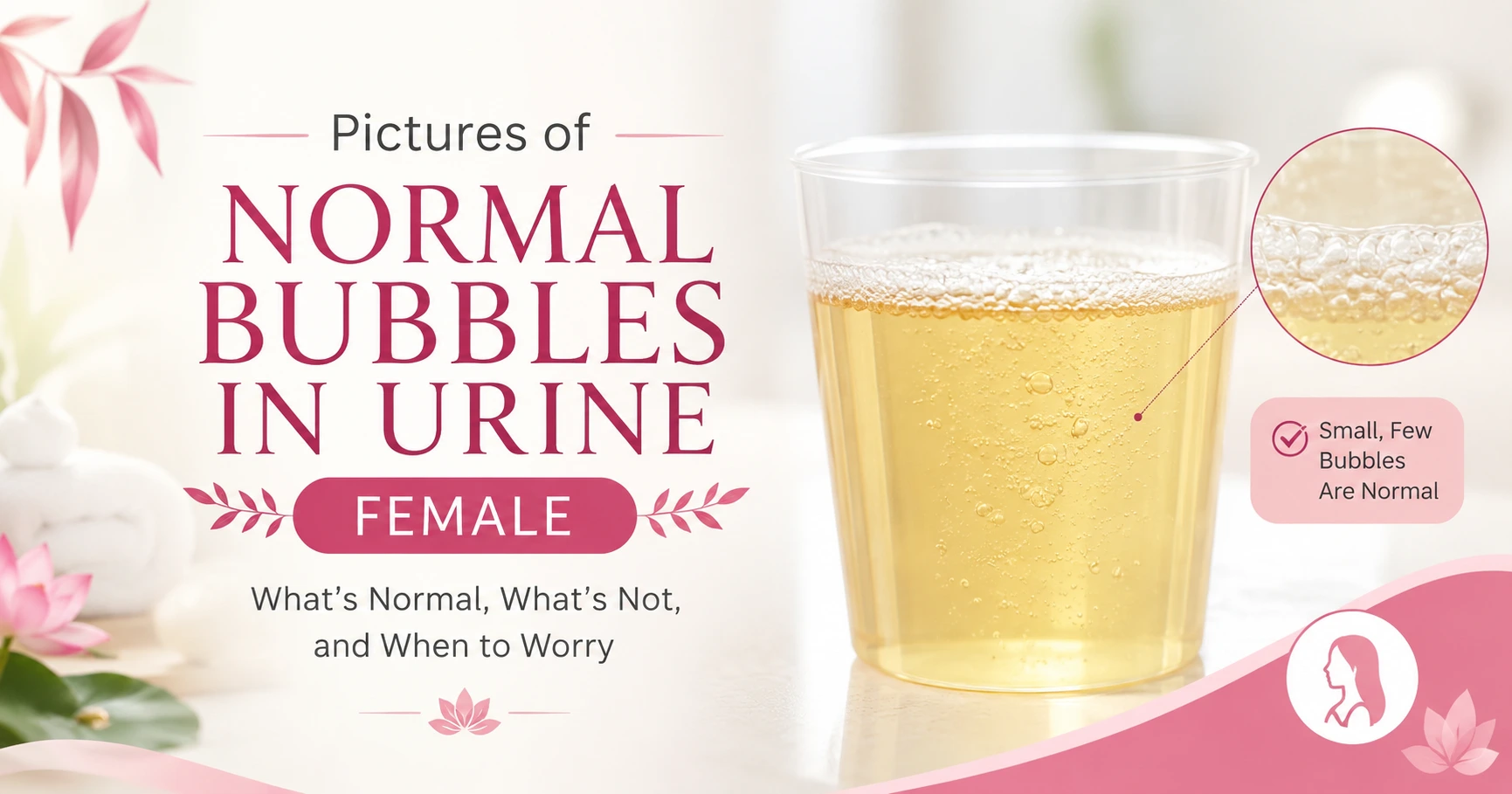
What do normal urine bubbles look like? Think of it like this: when you pour water into a glass quickly, a few bubbles form and then vanish within seconds. That's exactly what normal bubbles in urine look like. They're:
-
Sparse; just a few, not a full foam party
-
Clear or pale yellow in color
-
Quick to disappear; gone in under 10 seconds
-
Caused by the force and speed of your urine stream hitting the toilet water
If you're searching for pictures of normal bubbles in female urine, imagine those short-lived, transparent bubbles you see when you flush, not a thick, milky, long-lasting foam. That distinction matters a lot.
Normal Bubbles in Urine Female: The Boring (But Reassuring) Reasons
Let's start with the most unsexy explanations first, because most of the time, that's exactly what's going on.
-
Urination force: If you really had to go and you let it rip, the pressure causes bubbles. Fast stream + water surface = temporary bubbles. Physics, not pathology.
-
Concentrated urine: Not drinking enough water? Your urine becomes more concentrated, which can create more surface tension and, you guessed it, bubbles. Normal urine bubbles after urination female often trace right back to this.
-
Toilet cleaning products: Residual soap or cleaning chemicals in the toilet bowl can react with urine and create foam. Yes, really. Your toilet might be the culprit, not your kidneys.
-
Dehydration: A study published in the American Journal of Physiology; Renal Physiology (2013, Bankir et al.) found that urine concentration directly affects its physical properties, including surface tension, which influences bubble formation. So if you've been skimping on water, that's likely your answer.
Are bubbles in urine normal for females? In most of these cases, yes, absolutely.
Bubbles vs. Foam: Why the Difference Actually Matters
Here's where we need to get a little more precise, because people often use "bubbles" and "foam" interchangeably, and they're really not the same thing.
|
Feature |
Normal Bubbles |
Foamy Urine (Potential Concern) |
|---|---|---|
|
Appearance |
Clear, sparse, small |
Thick, white, soap-like, dense |
|
Duration |
Disappears in seconds |
Persists for a minute or more |
|
Frequency |
Occasionally |
Every time, consistently |
|
Likely cause |
Fast stream, dehydration, toilet soap |
Elevated protein, kidney issues |
|
Associated symptoms |
None |
Swelling, fatigue, changes in output |
|
What to do |
Monitor, hydrate |
See a doctor |
This table is essentially your go-to guide for pictures of normal bubbles in urine, female vs foamy urine, just described in words instead of images. Normal bubbles are brief visitors. Persistent foam is a reason to have a conversation with your doctor.
Urine Bubbles Female Causes: When It Goes Beyond Normal
Now, for the slightly less fun part. Sometimes urine bubbles female causes point to something worth investigating. Here are the main ones your doctor might mention:
-
Proteinuria (protein in urine): This is the big one. When your kidneys are stressed or damaged, they can leak protein into the urine. Protein reduces surface tension and creates that stubborn, foamy layer. A study from the Journal of the American Society of Nephrology (2004, Ginsberg et al.) established the link between proteinuria and persistent foamy urine as a clinical sign worth investigating.
-
Urinary Tract Infections (UTIs): A UTI can sometimes cause urine to appear cloudy, foamy, or bubbly due to bacterial presence and inflammatory proteins. Research published in European Urology (2010, Foxman et al.) highlighted that UTIs are among the most common urological conditions in women, affecting nearly 50-60% at some point in their lives.
-
Diabetes and blood sugar issues: When blood sugar is too high, glucose spills into the urine. This can cause foamy urine in women and is sometimes one of the earliest signs people notice. The New England Journal of Medicine (2010, Bakris et al.) outlined how uncontrolled diabetes contributes to kidney filtration problems that manifest in urine changes.
-
Kidney disease: Conditions like chronic kidney disease or glomerulonephritis can damage the filtration system over time. A study from Kidney International (2008, Coresh et al.) reported that nearly 26 million Americans have some form of kidney disease, and foamy urine is one of its more noticeable symptoms.
-
Retrograde ejaculation (yes, this affects men, not women; just noting it's often searched but irrelevant here): In women, a similar confusion happens with post-intercourse discharge mixing with urine temporarily. Usually, nothing to worry about.
Is Bubbly Urine Normal in Women? The Honest Answer
Is bubbly urine normal in women? Here's the honest, non-alarmist truth: occasionally, yes. Consistently, no; and that deserves a closer look.
The pattern matters more than a single instance. If you noticed bubbles in your urine, female, 1 time after chugging a coffee and barely drinking water all day, relax. That's almost certainly dehydration and flow speed doing their thing. But if you're noticing it every single time you go to the bathroom, and especially if it's accompanied by:
-
Swelling in your legs, ankles, or around your eyes
-
Fatigue that won't quit
-
Decreased urine output
-
Foamy urine that sticks around for more than a minute
...that's your body politely asking you to get your kidneys checked.
Bubbles in Pee Female: Practical Things You Can Do Right Now
Before you dive headfirst into a panic spiral, here are some genuinely useful things to try:
-
Drink more water; seriously, this fixes a surprising number of things
-
Check if your toilet has cleaning products in the tank or bowl
-
Notice whether the bubbles disappear in under 10 seconds or stick around
-
Track whether it's happening every time or just occasionally
-
If it persists, ask your doctor for a simple urine dipstick test; it takes minutes and tells you a lot
When to See a Doctor
There's no shame in getting something checked. If bubbles in pee female situations are happening consistently, book that appointment. A urinalysis is one of the simplest, cheapest, and most informative tests your doctor can run. It checks for protein, glucose, blood, and infection markers all at once.
The National Kidney Foundation recommends routine urine screening, especially for women with diabetes, hypertension, or a family history of kidney disease, because catching protein in the urine early can make a meaningful difference in outcomes.
The Bottom Line
Normal bubbles in urine female situations are usually just your body doing body things: fast stream, low water intake, or a very clean toilet bowl. A couple of quick-disappearing bubbles after you go? Probably nothing. A thick, soapy, persistent foam every single time? Worth a conversation with your doctor.
You know your body. Trust it. And drink some water.
📩 Ask a Kidney Expert (Free 10-Min Consultation)
FAQ
What does normal pee with bubbles look like?
Normal urine may have a few small bubbles that disappear within a few seconds after flushing.
How many bubbles are okay in urine?
A small amount of bubbles occasionally is usually normal, especially if you urinate quickly.
How do I remove bubbles in my urine?
Stay well-hydrated, but if bubbles keep coming back often, see a doctor to find the cause.
Should I see a doctor for urine bubbles?
Yes, if the bubbles are persistent or occur with swelling, pain, or changes in urine, it's best to get checked.