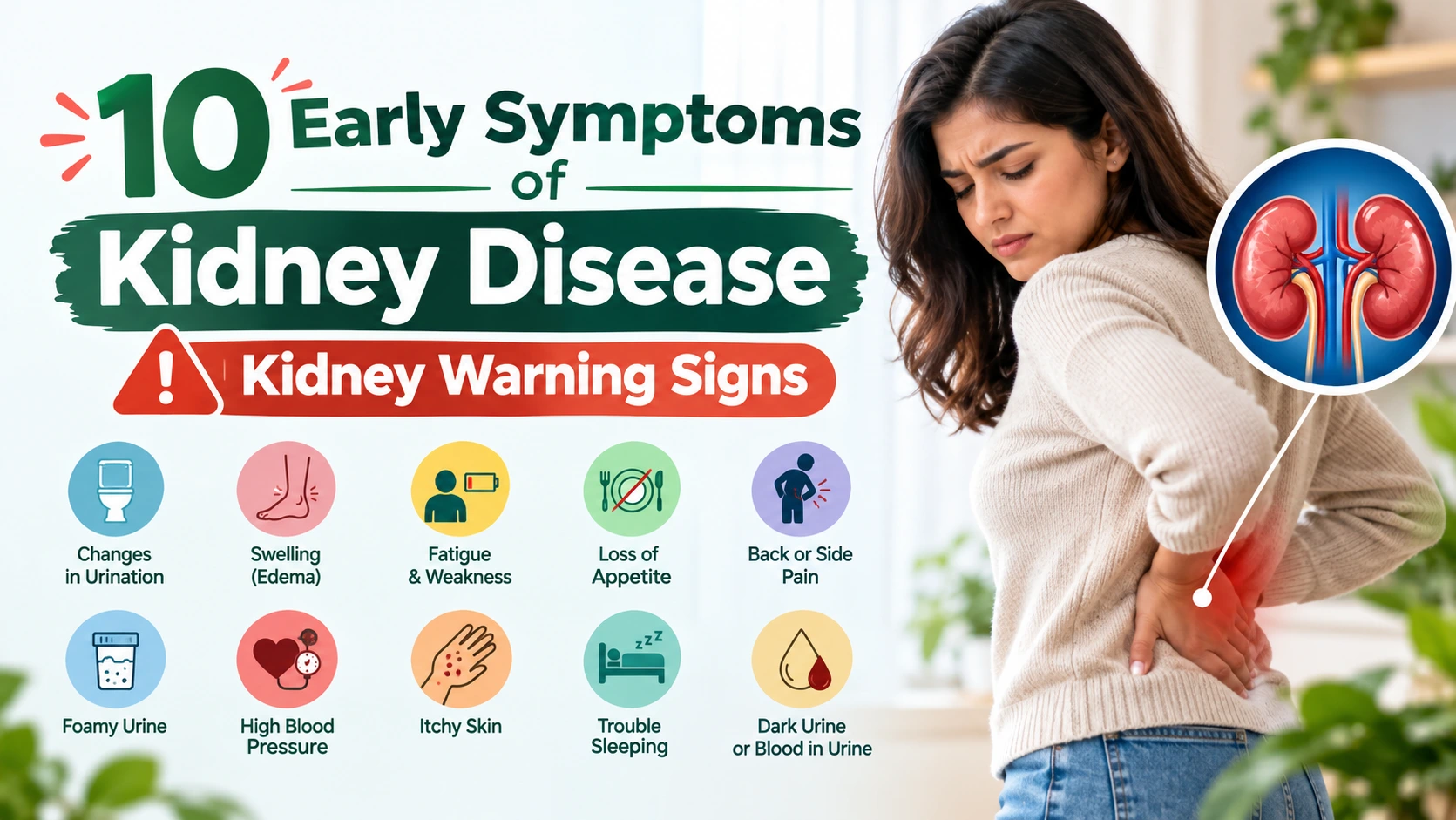

The 10 early symptoms of kidney disease include constant fatigue, swelling of the feet or legs, foamy urine, frequent bathroom trips and urge to use the toilet even in case of an empty bladder, blood in urine, puffiness of eyes, itching of skin, muscle cramps, nausea, lack of appetite, and confusion or brain fog. These symptoms look quite like those of a hard week, and therefore people often neglect them.
Your kidneys do not howl about health issues; they merely murmur them. According to CDC statistics, about 1 in 7 of US citizens live with a chronic renal condition. Nine out of ten of those individuals do not know it! Furthermore, a GBD study published in The Lancet claimed that about 700 million people were affected in 2017. It is important to know the early symptoms of kidney disease before they start screaming.
10 Signs, One by One
- 1. Lack of energy. Impaired body filters let all kinds of waste accumulate inside you. If you lack energy all the time and have a feeling that you are about to die before the evening comes, pay attention to your kidneys.
- 2. Swollen ankles and feet. Extra fluids go to the lower parts of the body because of gravity.
- 3. Foamy urine. A small amount of bubbles is considered normal. Persistent lather in your urine could indicate protein loss. CKD Prognosis Consortium (The Lancet, 2010) associated protein in urine with increased long-term risks.
- 4. Changes in urination frequency. Increased number of visits to the toilet at night and reduction of it can both be signs that something needs attention.
- 5. Blood in urine. Pink, red, or tea-colored urine should not be ignored.
- 6. Morning puffy eyes. You can't blame everything on staying up late.
- 7. Skin dryness and irritation. Waste can cause skin to itch and scratch the way a cat does when touching a new sofa.
- 8. Muscle cramps. Mineral imbalances can trigger twitches and cramps.
- 9. Nausea and bad appetite. It is very difficult to eat anything, and sometimes there is a metallic taste in your mouth.
- 10. Forgetfulness and lack of breath. Being forgetful is okay, but constant forgetfulness plus shortness of breath is a cause to call for help.
Symptom or Just a Monday?
|
Observation |
My usual excuse |
When to visit a doctor |
|
Tiredness |
Adulting is hard |
It lasts for weeks |
|
Puffy eyes |
Watching Netflix in bed |
Every day |
|
Foamy urine |
Strong water pressure? |
It keeps coming back |
|
Cramps |
Skipped leg day |
They hit during the night, usually |
Getting It Checked
Fortunately, the diagnostic tests used for the kidney health assessment are quite simple. Typically, a blood test for creatinine and eGFR, along with a urine test for protein, are performed. KDIGO guidelines recommend regular screening for individuals who suffer from diabetes, high blood pressure, or have a family history of kidney disease, because these factors are among the most important risk factors.
How Ayurveda Plays a Role
Many people are searching for kidney disease treatment with Ayurveda in addition to their conventional treatments. Dr. Puneet Dhawan and other representatives of this field mention the importance of diet, lifestyle, and herbal treatments. At Karma Ayurveda for kidney disease treatment, this approach is also used, and it works best if your nephrologist is informed about it. It is important to understand that Ayurveda is not a substitute for regular testing or prescribed treatment.
The most important things for treating kidney disease naturally are proper hydration, limiting sodium in the diet, and controlling sugar levels and blood pressure. In addition, people often ask about ways to improve kidney health by using natural products, and thus herbs for kidney stones in Ayurveda is one of the most searched questions. Traditional Indian medicine mentions herbs like Punarnava, Gokshura, and Pashanbhed, but there is little scientific evidence about their effectiveness on a large scale.
Main conclusions
- Early signs include fatigue, swelling, foamy urine, and itching.
- Many people do not know they are suffering from this condition, so screening is necessary.
- Diabetes and high blood pressure are the greatest risk factors for this disease.
- A simple blood and urine test provides clear results.
- Ayurveda can support your treatment, but it cannot substitute it.
📩 Ask a Kidney Expert (Free 10-Min Consultation)
FAQs
What is the earliest sign of kidney disease?
However, in other cases, there is only a feeling of tiredness and puffiness, which makes it hard to recognize.
Is it possible to have kidney problems without experiencing any symptoms?
It is, especially when you are at the beginning stage of writing code. So, testing is better than guessing.
How is kidney disease diagnosed?
A simple blood test (eGFR) and a urine test will do the job.
Does foamy urine always mean something is wrong?
Not always, but if it hangs around, get it checked.
Can lifestyle changes slow it down?
They can help a lot, especially managing blood pressure, sugar, and salt.
Disclaimer
This blog is for general awareness only and isn't medical advice. Symptoms listed can have many causes. Please consult a qualified doctor for diagnosis and treatment, and don't start, stop, or replace any medication or herbal remedy without professional guidance.